Evolution Paths - Lumin to Gamma to Nova
How Aniimo evolution works at launch: the Lumin, Gamma, and Nova stages, regional forms versus evolution, burst evolutions, and the Resonance Training system.
FAQ
What are the evolution stages in Aniimo?
Do regional forms count as evolution?
What are Soleon and Fennelun?
What is Resonance Training?
Evolution Stages
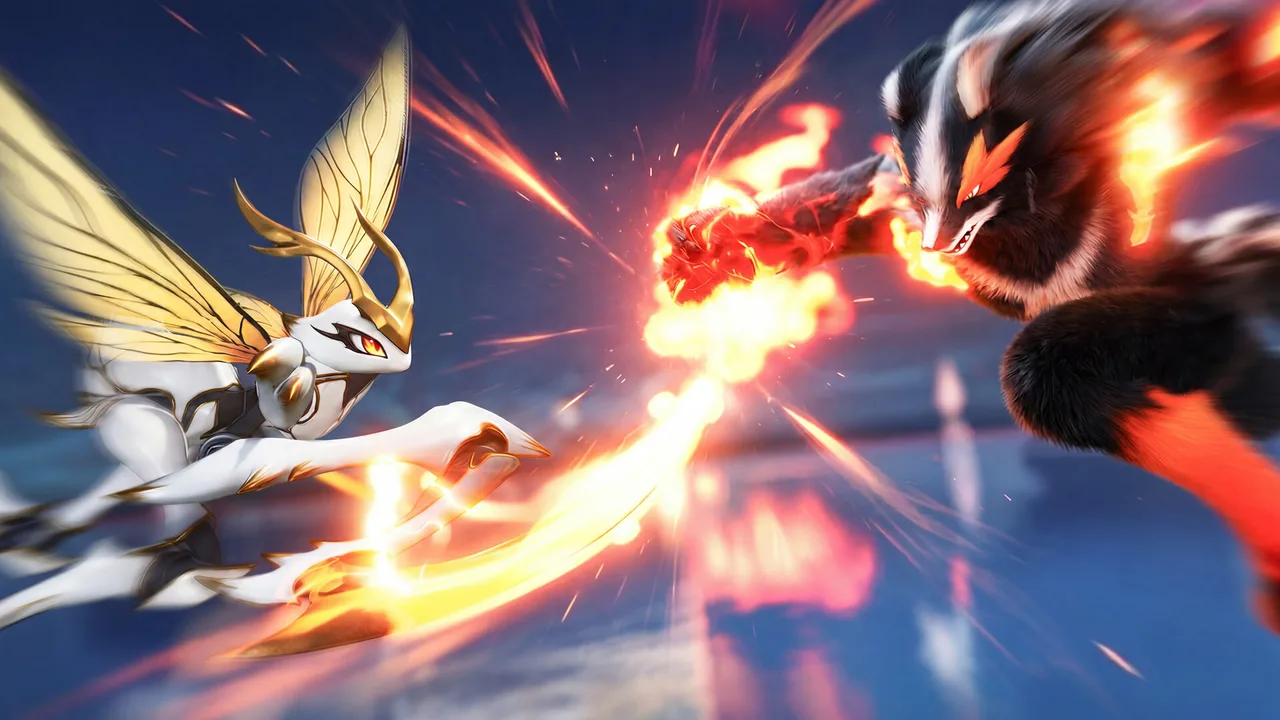
The three named stages, per the official Aniilog:
| Stage | Meaning | What Changes |
|---|---|---|
| Lumin | Base stage | Starting stats and abilities |
| Gamma | Mid stage | Unlocks new skills, better stats |
| Nova | Peak stage | Maximum ability values, final form |
Two structural facts from the official pages:
- Stage composition varies per species. Iris lists Lumin and Gamma stages; Budclaw lists Lumin and Gamma; Nimbi lists Lumin plus two Gamma stages; Inferlupa’s line runs all the way through Nova. Not every creature reaches Nova.
- Evolved forms are their own Aniilog entries. The Fire line, for example, occupies four consecutive numbers — Emberpup (NO.001), Flameruff (NO.002), Scorchhowl (NO.003), Inferlupa (NO.004) — one number per stage. The full numbered sequence lives in the creature database.
Evolution levels — what is and isn’t confirmed
Community beta documentation cited evolution at levels 20-30 for Lumin → Gamma and 40-50 for Gamma → Nova, with some branches needing materials. The official companion wiki confirms the stage system itself but does not render per-species level thresholds yet — so treat those ranges as beta-era guidance, not launch fact. Exact per-species thresholds land here as each creature profile is verified against the live game.
Branching works the same way: the beta-era branch tables (Budclaw into Shrubclaw or Geoclaw, Susuta into Popota or Piopiota) match how consecutive Aniilog numbers group, but the official pages do not yet spell out the choice mechanics — including whether a branch is permanent. Verify in-game before committing a branch you care about.
Regional forms are NOT evolution
The official Aniilog lists two different things per species, and they are separate systems:
| System | What it is | Official example |
|---|---|---|
| Evolution stages | Permanent growth through Lumin / Gamma / Nova | Inferlupa line reaches Nova |
| Regional forms | Catch-location variants of the same stage | Emberpup: Basic, Highland, Mountain Woods |
Budclaw’s forms (Basic, Mudflat, Beach, Bay) and Nimbi’s (Basic, Rainstorm, Cloudmist, Plateau) are form lists, not evolution lines — a Rainstorm Nimbi is not “more evolved” than a Basic one. Forms are why the catchable roster feels far larger than the 86 base entries; see the creature database for the full breakdown.
Burst evolutions — the third layer
Combat adds a temporary evolution layer on top: ultimate skills that evolve the user mid-fight. The official creature pages document the starters’ versions — Helion’s Helios’ Judgment evolves him into Soleon with a damage bonus until combat ends, and Lunara’s Selene’s Judgment does the same into Fennelun. Burst evolutions revert after the fight; they are a combat mechanic, not a progression stage — one more reason both starters stay relevant regardless of stage progression (see the Helion vs Lunara comparison).
Resonance Training
Resonance is the per-creature training ladder that runs alongside (not through) evolution. Officially documented at launch:
- Top rungs: LV 6 unlocks at level 55 (1 Omnisource Crystal), LV 7 at level 65 (2 Omnisource Crystals) — visible on every official creature page we have verified.
- Capability caps unlock gradually with the creature’s level and Resonance star rank (official dev letter), and Capability Awakening resets below level 60 are free with materials returned — respec freely while climbing.
- The beta-era CP-allocation and tier-unlock tables did not survive to the official pages — they are treated as beta structure, not launch fact, until the live game documents them.
Planning your evolutions
- Check the official page first — stage composition and forms are listed per species; thresholds are not (yet).
- Remember one number per stage — evolving fills the next Aniilog slot in the line; your Aniilog completion tracks stages.
- Don’t confuse form rarity with stage growth — a regional form is a variant, not an upgrade.
- Resonance is the long game — Omnisource Crystals at 55/65 are the documented endgame rungs.
Evolution grows a creature; Twining is how you actually use it — movement, puzzles, and combat all draw on the forms you’ve evolved, with launch-verified stat tables for the standout picks.
Gallery
Related Articles
Bosses
Omega Infergon Boss Guide - Russet Highlands
How to unlock and beat Omega Infergon in Aniimo: the Warrior Journey quest gate, its Fire kit with projectile reflection, and the team elements that beat it.
Bosses
Omega Sherro Boss Guide - Echoback Landing
How to unlock and beat Omega Sherro in Aniimo: the Stars and the Knight quest gate, its water-terrain-amplified kit, and the elements that counter a Water boss.
Bosses
Omega Tuckin Boss Guide - Mistwoods
How to unlock and beat Omega Tuckin in Aniimo: the Binding Oath quest gate, its Hummin-summoning BREAK kit, and the Fire, Wind, or Dark answer to Grass.
Was this helpful?
Thanks for the feedback!